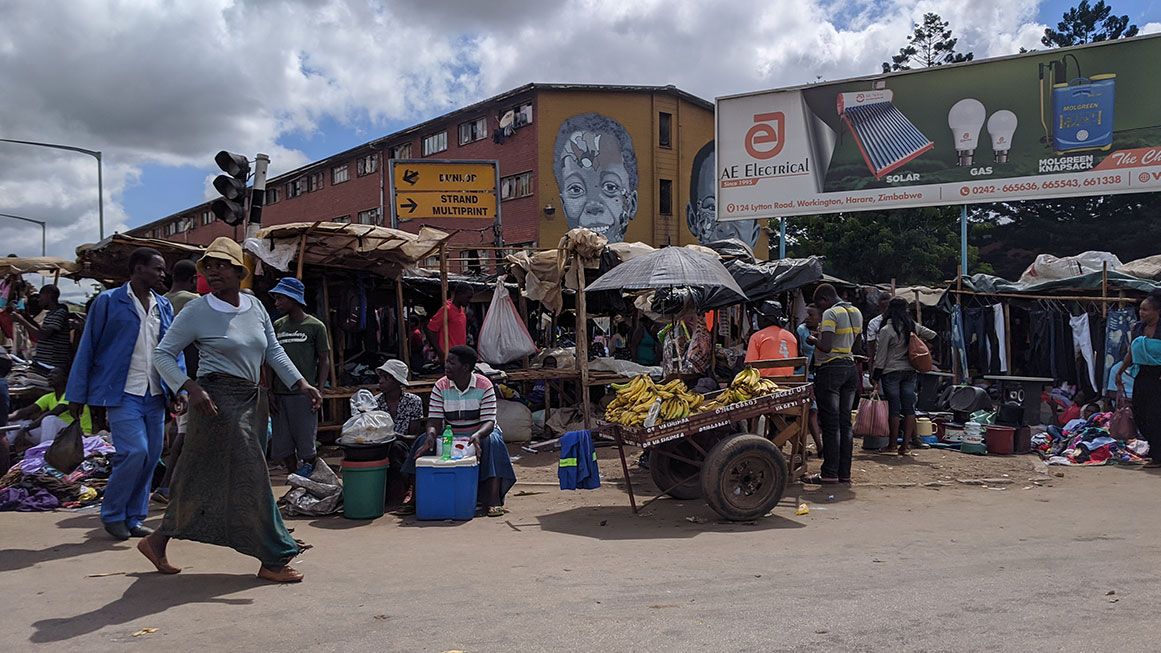
Where is this? If you guessed Salisbury, Rhodesia you would be correct but today Salisbury is called Harare, and Rhodesia is called Zimbabwe where unlike decades ago when it was founded by Cecil Rhodes, life is terribly difficult even though the country has massive amounts of everything needed for a great life: minerals; fertile soil; and wonderful weather. In fact Zimbabwe enjoys a lovely, temperate climate. The central highveld plateau has temperatures up to 28°C/82°F. … Mana Pools, Matusadona and Gonarezhou are even lower and get hot, with temperatures soaring to 35°C/95°. During the Wet season, from November to March, rains usually fall in the afternoon..
Zimbabwe’s tobacco sector is the largest grower of tobacco in Africa, and the 6th largest in the world. Zimbabwe’s mineral resources include, amongst others, coal, chromium ore, nickel, copper, iron ore, vanadium, tin, platinum group metals (such as palladium) and diamonds. Globally Zimbabwe is a significant producer of lithium, chrysotile asbestos and vermiculite. … Gold, platinum group metals and chromium are Zimbabwe’s key mineral resources. The Great Dyke provides most of Zimbabwe’s chromium reserves. Zimbabwe experienced a decline in the mining of many minerals in the period to 2008 including the closure of several gold mines. However, diamond production increased making the country Africa’s seventh largest producer by 2008. The country has considerable coal reserves which are used in power generation. Its coal-bed methane field, the largest in southern Africa has never been fully exploited because politically Zimbabwe is a corrupt basket case of a country. For tourists there is Victoria Falls (Lozi: Mosi-oa-Tunya, “The Smoke That Thunders”; Tonga: Shungu Namutitima, “Boiling Water”) is a waterfall on the Zambezi River in southern Africa, which provides habitat for several unique species of plants and animals on the border with Zambia Vic Falls is twice as high as Niagra falls and is considered as the longest waterfall. It’s half a kilometer longer than Niagra at 1,708 metres (5,604 ft). But thousands of white farmers were forced from their very fertile farms, most times violently, since 1980 and in 2001 under a government programme of land reform the government promised to return the land or pay compensation. It hasn’t happened. The seizures were blamed for destroying Zimbabwe’s economy, and ruined relations with the West and the murder of the white farmers has moved into South Africa.
Views: 11