White females are only banned in 75.4% of the NFL Commercials but it’s not due to evolution but to anti-white Leftist Liberals who delight in seeing their own race eliminated thus proving the stupid nature of Leftist Liberals.
In addition to almost eliminating white men from commercials they have made the remaining 3.3% stupid. It’s as though Chuckie Cheese is selecting commercial actors from the most diverse, meaning no white’s for commercials. Considering their ban it should be no surprse that white men refuse to buy anything advertised during an NFL game. It’s further proof that monkeys came before Liberals so Liberals are their descendants. This is Apartheid against White’s and especially WHite Males because White Males are so superior that Leftist Liberals are really, really pissed out of their rabbit-assed minds. Consider this:
Racial diversity in TV commercials can backfire if not seen as genuine, new study finds
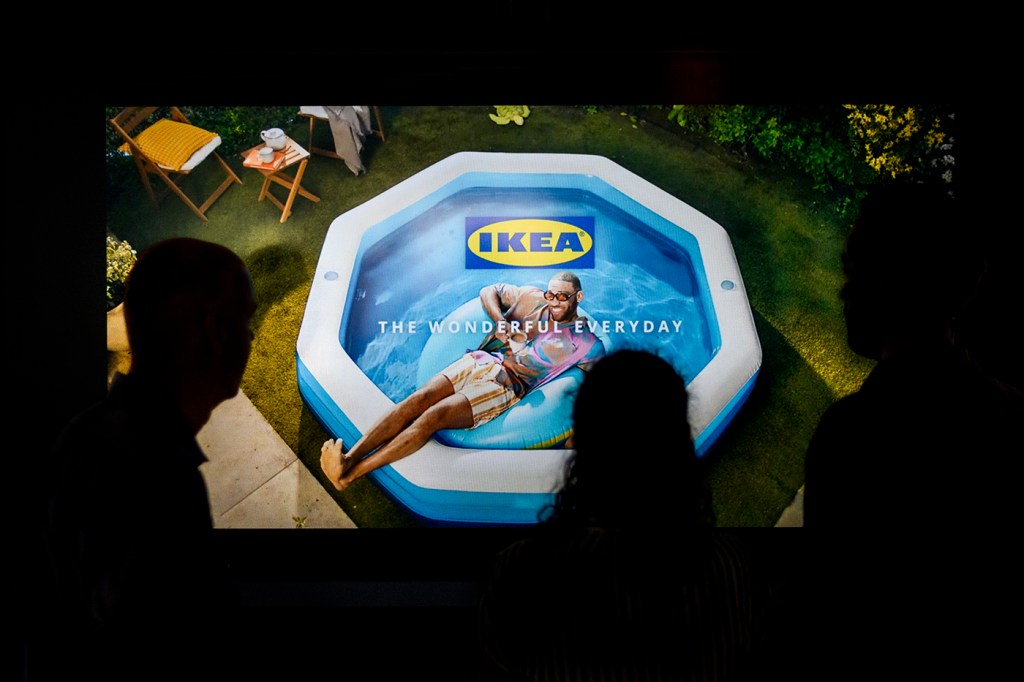
Heightened public attention to racial justice after the murder of George Floyd led to a noticeable change in how racial diversity in TV advertisements affects potential consumer spending, a study finds.
Northeastern researchers Koen Pauwels, distinguished professor of marketing, and Yakov Bart, associate professor of marketing, measured the effect of racially diverse TV ads on consumer purchase intentions (average willingness to purchase a product or a service) in collaboration with co-authors, Gijs Overgoor from the Rochester Institute of Technology and Gokhan Yildirim from Imperial College London.
“Television remains a significant and influential medium for consumer persuasion,” Bart says. “And there has been a lot of conversation in the media industry about the importance of responding to the desire of consumers to see more racial diversity in media content.”
 Portraits of Northeastern Professors Koen Pauwels and Yakov Bart. Photo by Adam Glanzman/Northeastern University and Matthew Modoono/Northeastern University
While the importance of diversity from the societal perspective is clear, researchers wanted to understand how the increase of diversity in visual marketing communication affects consumer attitudes towards the brands and companies’ profits.
To conduct this study, the researchers deployed pre-trained deep learning models that could identify faces of the people in the TV commercials and classify the race of each actor. Then they quantified the frequency of Black actor appearances for each airing of an advertisement.
A major factor in the analysis was the death of Floyd, a Black man killed by a Minneapolis police officer in May 2020. This event sparked a renewed social justice movement and heightened awareness of inequality and racism.
The researchers found a noticeable change in the relationship between racial diversity in TV ads and the willingness of consumers to purchase a product or a service before and after Floyd’s murder. They showed how this relationship depends on how consumers process ads.
Sometimes consumers watch the whole commercial, enabling them to carefully and deliberately think about the message conveyed in it. This is called central processing.
Related: Advertisers are tracking your every move, even in places you thought were off-limits
Other ads might be watched just for a few seconds, before consumers change the channel or switch the TV off. In this case, the ad is processed peripherally, superficially and emotionally, Bart says.
The study shows that before Floyd’s murder there was a positive link between higher representation of Black actors in commercials and the likelihood of consumers buying from the brands—but only for the ads that were more likely processed peripherally.
“Consumers saw some Black actors [in the commercial] and said ‘Well, the brand is probably thinking about it [racial diversity],’” Bart says. “‘And we want to support it.’”
What surprised researchers the most was that consumers were less inclined to purchase from brands with a higher representation of Black actors in their ads when they engaged in central processing.
Bart and Pauwels hypothesize that the desire of brands to include more Black actors into their ads had potentially backfired. Consumers watching the ads more carefully regarded them as not authentic and genuine but rather motivated by the perceived change in sociopolitical agenda and context.
“Under such increased scrutiny of the TV ads, the impact of racial diversity on consumer purchase intention is less likely to be positive,” the study concluded, “because consumers are more likely to perceive the brand advertisement as an inauthentic, performative or disingenuous attempt to capitalize on public attention to racial inequality.”
Related: Diversity in health care remains a problem. Northeastern’s partnership with a historically Black university in Charlotte aims to fix that.
Advertising is considered much more genuine, Pauwels says, when brands consistently take racial equality into account outside of special occasions, such as Black History Month and Juneteenth.
“In general, I would say, if this is something that you genuinely believe in as a company or a brand, then you should do that consistently, and not just when it’s in the public’s eye,” he says.
“What really matters is that it’s important to understand the intricacies, the nuances of what happens when brands increase diversity in the marketing communications,” Bart says. “It’s not as simple as ‘hey, let’s bring in more Black actors.’”
In the future, Pauwels and Bart are planning to focus on the impact of diversity, equity and inclusion more broadly and investigate the impact of higher visibility in marketing communications of other underrepresented groups, based on race, gender, sexuality and social class.
“This expanded focus would help create a more inclusive and authentic representation in advertising, further challenging stereotypes and promoting positive social change,” the researchers conclude.
Alëna Kuzub is a Northeastern Global News reporter. Email her at a.kuzub@nullnortheastern.edu. Follow her on X/Twitter @AlenaKuzub.
Views: 2