Photography is often seen and depicted as a major marker of freedom because it depicts reality. Sunlight destroys color because of the action of its ultra-violet radiation. Same for flash or strobe lights that are used to get photographs in dark places. They produce ultra-violet radiation that can destroy color. So: NO FLASH! is the rule inside the Sistine Chapel, one of the most extraordinary rooms ever decorated. Michelangelo painted the visually stunning ceiling while the plaster was still wet. Between 1508 and 1512, under the patronage of Pope Julius II, Michelangelo painted the chapel’s ceiling, a project that changed the course of Western art and is regarded as one of the major artistic accomplishments of human civilization. 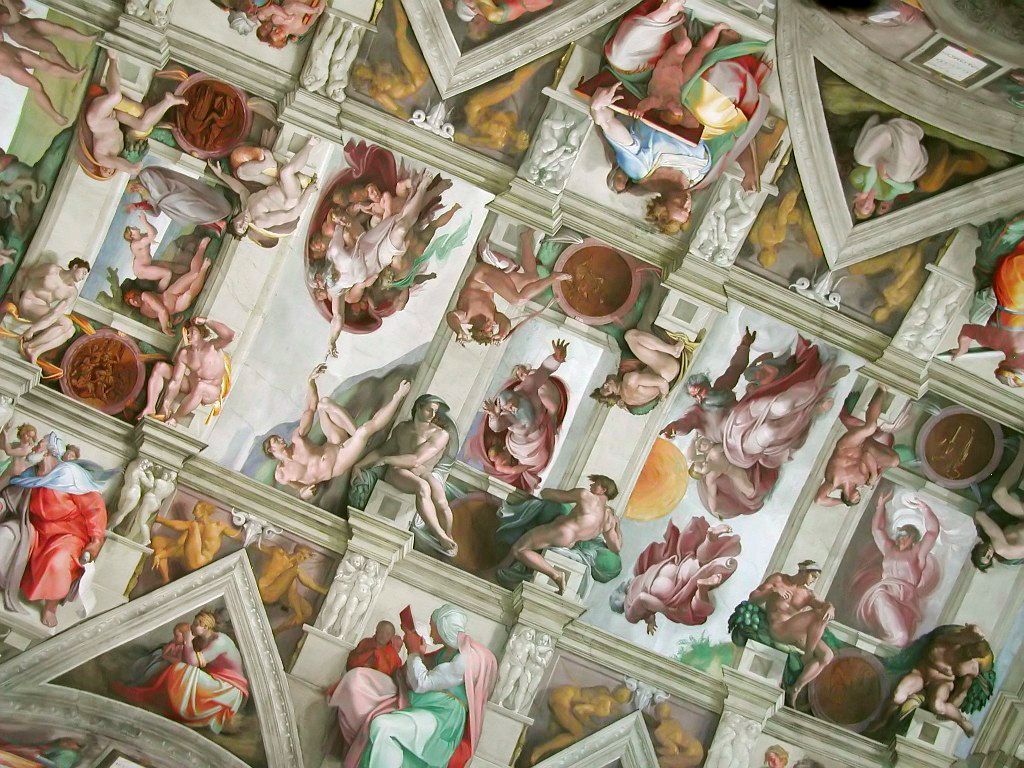 The walls of the chapel have also been painted by very famous painters including Botticelli who painting is what made the chapel famous.
Sistine Altar Wall by Michelangelo
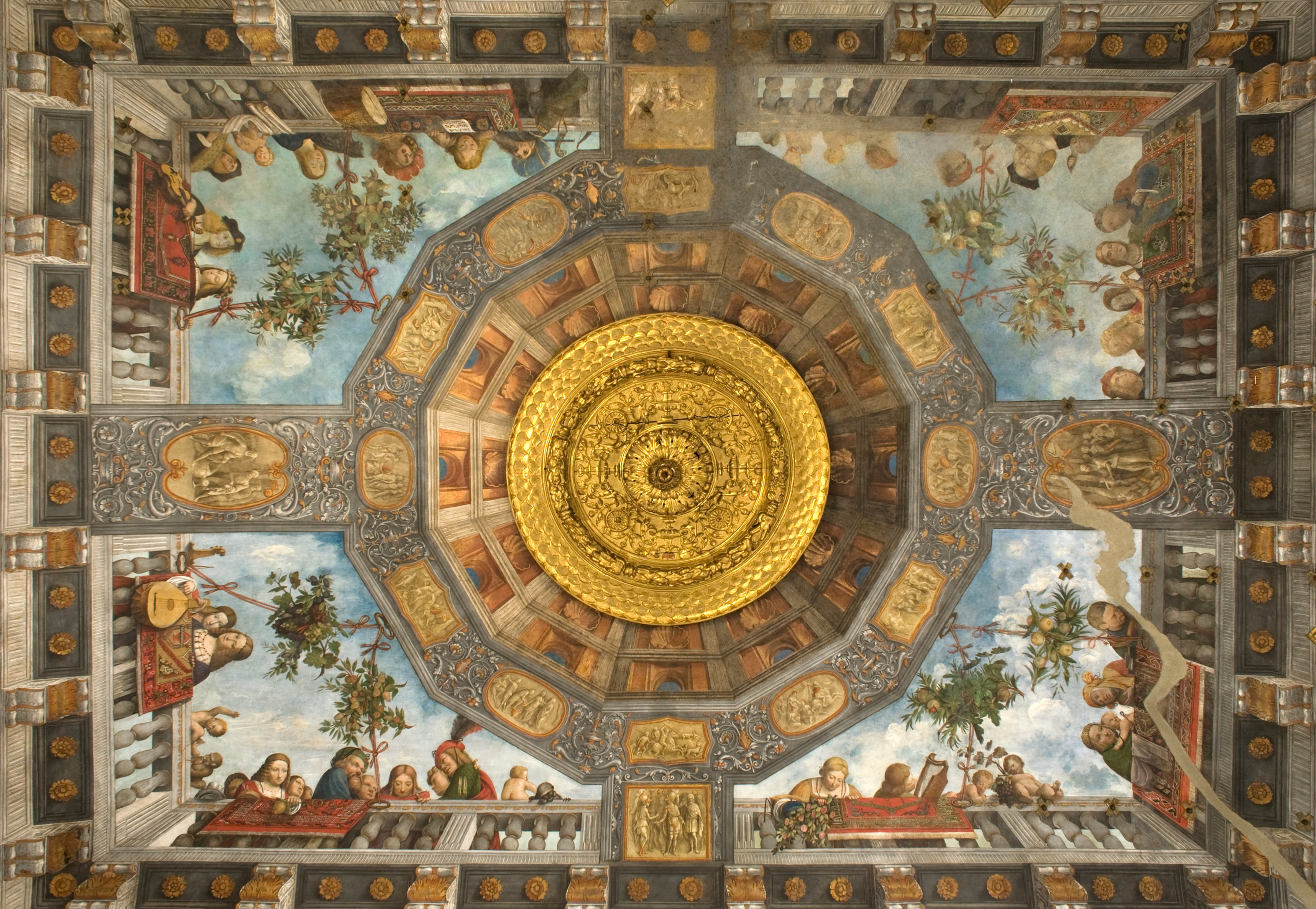 Ceiling of the Treasure Room of the Archaeological Museum of Ferrara, Italy, painted in 1503–1506
Jews Inside The Vatican. The major religious figure, Moses was undeniably Jewish. Moses, The Jew is prominently featured in the Sistine Chapel, both on the walls and the ceiling. The walls of the chapel contain frescoes depicting the Life of Moses, painted by Renaissance artists including Sandro Botticelli, Domenico Ghirlandaio, and Cosimo Rosselli between 1480 and 1481. These frescoes illustrate key events from Moses’ life, such as his birth, his flight to Midian, and his return to Egypt to lead the Israelites out of slavery.
Michelangelo’s ceiling frescoes also include scenes related to Moses. For example, the “Brazen Serpent” scene, which depicts God instructing Moses to create a brass serpent to heal the Israelites from snakebites, is located on the ceiling. Additionally, Moses is referenced in the fresco of the “Creation of Adam,” where the figure of Moses is said to be a model for the pose of Adam, representing the moment of creation.
The chapel’s frescoes also include the “Descent from Mount Sinai,” painted by Cosimo Rosselli and his workshop, which shows Moses receiving the Ten Commandments. This fresco is part of the larger narrative cycle of the Life of Moses on the chapel walls.
Furthermore, BYU professor John W. Welch has pointed out the parallels between Moses and Christ using the Renaissance art on the long walls of the Sistine Chapel to illustrate these connections.
Views: 7